
 By
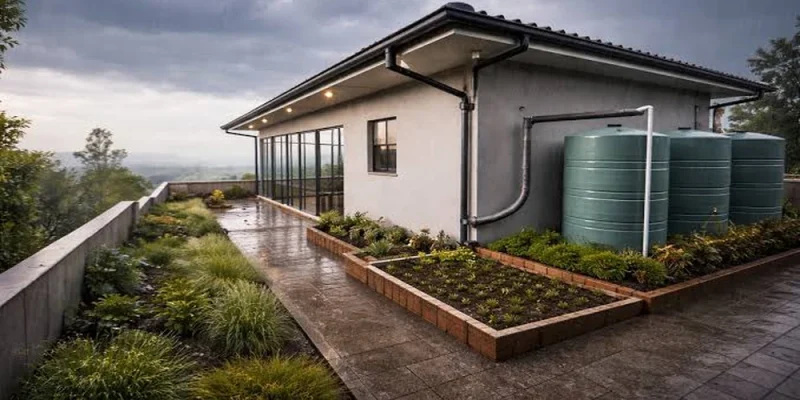
Every inch of rain that falls on a 2,000 square foot roof sheds roughly 1,200 gallons of water. In most homes, that water rushes through the gutters, spills out of the downspouts and disappears down the street within minutes. In hot, drought-prone regions, more homeowners are starting to see that runoff as something to save rather than drain away, and the roof is at the center of that change.
Collecting rainwater is more than a plumbing project. The shingles or metal panels, the gutters, the downspouts and even the pitch of the roof decide how much water you capture and how clean it stays. Exterior contractors like Barbarian Roofing now often handle roofing, gutters and rainwater collection systems as one connected job, because a storage tank is only as good as the surface feeding it.
That connection matters most where summers run long and dry spells stretch for weeks. Groundwater levels drop, cities announce watering restrictions, and landscapes struggle just when they need water most. A well-planned roof catchment can carry gardens, fruit trees and even animal troughs through those gaps.
The Math Behind Every Rainstorm
The numbers are simpler than most people expect. One inch of rain falling on one square foot of roof produces about 0.62 gallons of water. Scale that to 1,000 square feet and a single inch of rain gives you around 620 gallons.
Use the roof’s footprint, not its sloped surface area. A steep roof and a low-slope roof covering the same house catch nearly the same amount of rain, because what counts is the ground area underneath.
No system catches every drop. Splash, evaporation, overflowing gutters and the dirty first flush all take a share, so planners usually assume 75 to 85 percent efficiency. A 2,500 square foot footprint in an area averaging about 34 inches of rain a year could realistically gather more than 40,000 gallons.
The catch is timing. Rain tends to arrive in heavy bursts followed by long dry stretches, so tank size often matters more than roof size. Recent research from Texas State University introduced a free tool that helps homeowners estimate how reliable a household rainwater system would be based on local rainfall patterns, which is far more useful than a simple annual average.
Roofing Material Shapes Water Quality
What the rain touches on its way down matters, especially if the water will go anywhere beyond the flower beds.
- Metal roofing: Smooth painted or Galvalume panels shed water fast, hold little debris and are generally the first choice for systems that may eventually supply drinking water.
- Asphalt shingles: Perfectly workable for irrigation. Expect loose granules in the water, particularly during the first several rains after a new roof goes on.
- Clay and concrete tile: These absorb a little water and can hold more dust and organic growth, which slightly lowers yield.
- Wood shakes: These are often treated with preservatives, so the water is best kept away from vegetable gardens.
Coatings deserve attention too. Some roof rejuvenation treatments and reflective coatings are fine for collected water, while others are not meant for it. Checking the product data sheet before applying anything saves a lot of guesswork later.
Gutters Carry More Weight Than You Think
Gutters are where most collection systems quietly fail. A standard 5-inch gutter can be overwhelmed by the intense downpours that roll through warm climates, where two or three inches of rain can fall in an hour. When gutters overflow, that water is lost, and it often soaks the fascia boards and the soil around the foundation.
Larger 6-inch gutters with oversized downspouts handle heavy bursts far better. Proper slope toward each outlet keeps water moving instead of pooling. Leaf screens or gutter guards cut down on the debris that would otherwise rot inside a tank.
It also helps to think about which downspouts feed the system. Some homeowners route only the back half of the roof to a tank and leave the front untouched, which keeps the setup tidy and out of view from the street.
Keeping the Dirty Water Out
The first few minutes of any rain wash dust, pollen, bird droppings and leaf grit off the roof. A first flush diverter catches that initial runoff and sends it away from the tank. A common starting point is to divert around 10 gallons for every 1,000 square feet of roof, adjusted for how dusty or tree-covered the property is.
From roof to storage, a well-designed system usually follows this path:
- Rain sheds off the roof surface into screened gutters.
- The downspout carries water to a first flush diverter.
- Cleaner water passes through a fine screen into the tank inlet.
- A calmed inlet keeps settled sediment at the tank bottom undisturbed.
- An overflow pipe directs excess water safely away from the foundation.
- A pump and filter move water to hoses, drip lines or indoor fixtures.
Each stage removes a little more debris, which is why water that sits in a tank for weeks can still come out clear.
Storage, Rules and Local Incentives
Tanks come in polyethylene, fiberglass and galvanized steel. Opaque walls matter, since sunlight inside a tank feeds algae. Weight matters even more: a full 1,000-gallon tank weighs over 8,000 pounds, so it needs a level, compacted base or a concrete pad.
Many areas actively encourage rainwater collection. In parts of the South, equipment can qualify for sales tax exemptions, and homeowners associations are often limited in how far they can restrict rain barrels, although they may still set rules on placement and screening. The Texas Commission on Environmental Quality offers free guidance on capturing and using rainwater for landscaping, which is a sensible place to start before buying equipment.
Drinking water is a different level of commitment. It calls for filtration, disinfection and regular testing, and any system tied into a home that also has city water needs proper backflow protection.
Timing the Project Around the Roof
The smartest moment to add rainwater collection is when the roof or gutters are already due for work. Installing a tank under a roof that has only a few years left means taking downspouts apart again later. Pairing the projects lets the gutter layout, downspout positions and catchment surface be planned together from the start.
A roof inspection beforehand also shows loose flashing, worn shingles or damaged drip edges that could shed debris into stored water. Fixing those first protects both the house and the harvest.
Seen this way, a roof does more than keep the weather out. With the right surface, gutters sized for real storms and a tank big enough to bridge dry months, it can supply a household with water at the time of year when water costs the most and is hardest to get.
Comments